Enbridge, Shell to build pipelines to service BP’s Kaskida oil hub

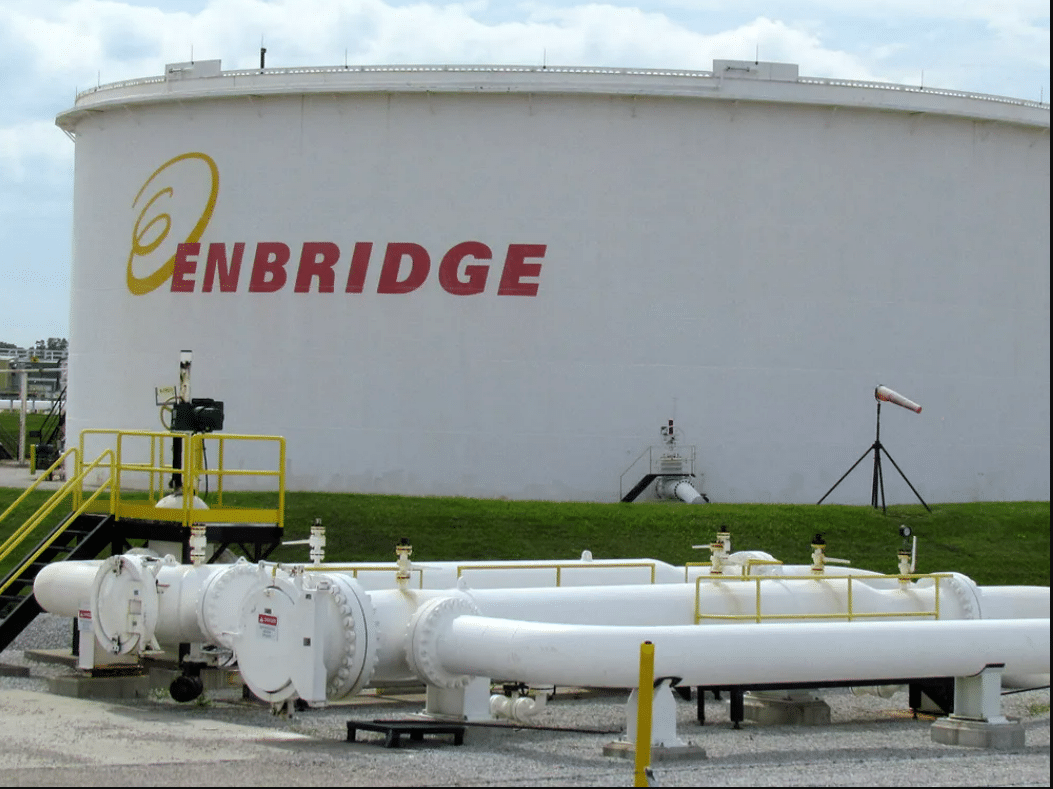
Canada’s Enbridge , opens new tab said on Thursday it would build and operate crude oil and natural gas pipelines in the U.S. Gulf of Mexico for the recently sanctioned Kaskida oil hub, operated by British oil major BP (BP.L), opens new tab.

Separately, Shell  announced the final investment decision for its Rome Pipeline, which would export the oil produced from the Kaskida project.

BP’s sixth operating hub, Kaskida, has oil production slated to start in 2029 and features a new floating production platform with a capacity to produce 80,000 barrels per day from six wells in the first phase.

The company’s U.S. Gulf of Mexico output averaged 300,000 barrels of oil and gas per day in 2023, with the company targeting 400,000 bpd by 2030.

Enbridge’s crude oil pipeline would be called the Canyon Oil Pipeline System, with a capacity of 200,000 bpd.

Its natural gas pipeline would be named Canyon Gathering System with a capacity of 125 million cubic feet per day and would connect subsea to Enbridge’s offshore existing Magnolia Gas Gathering Pipeline.

The pipelines are expected to be operational by 2029 and would cost $700 million, the Canadian firm said.

Shell’s Rome Pipeline, projected to begin operations in 2028, would increase access between the company’s Green Canyon Block 19 pipeline hub and the Fourchon Junction facility on the Louisiana Gulf Coast.

By Reuters / October 3, 2024

U.S. Refinery Activity Increases, Crude Oil Imports Decline in Latest EIA Report

The U.S. Energy Information Administration’s (EIA) latest Weekly Petroleum Status Report, released on February 28, 2024, shows positive signs for domestic refinery activity, but also highlights a decrease in crude oil imports.x

Key Findings:

Refinery Activity Up:

U.S. crude oil refinery inputs averaged 14.7 million barrels per day (mbpd) during the week ending February 23, 2024, an increase of 100,000 bpd from the previous week. Refineries operated at 81.5% of their capacity.

Crude Oil Imports Down:

Crude oil imports averaged 6.4 million bpd last week, a decrease of 269,000 bpd from the prior week. However, over the past four weeks, crude oil imports averaged 6.6 million bpd, slightly exceeding the same period last year.

Gasoline Production Up:

Production of both gasoline and distillate fuel increased last week, averaging 9.4 million bpd and 4.3 million bpd, respectively.

Inventories:

U.S. commercial crude oil inventories increased by 4.2 million barrels, but remain slightly below the five-year average for this time of year. Conversely, gasoline and distillate fuel inventories decreased and are currently below the five-year average.

Prices:

The price of West Texas Intermediate crude oil decreased by $2.05 per barrel compared to the previous week, while the national average retail price for gasoline and diesel fuel both declined slightly.

Overall, the EIA report indicates increased domestic refining activity alongside a decrease in crude oil imports. While gasoline and distillate fuel production rose, their inventories remain below the five-year average.

By: Barchart / Hedder , March 8, 2024

CITGO Petroleum Corporation Prices $1.10 Billion Senior Secured Notes

CITGO Petroleum Corporation (“CITGO”) has priced $1.10 billion aggregate principal amount of 8.375% senior secured notes due 2029 (the “notes”) in a private offering exempt from the registration requirements of the Securities Act of 1933, as amended (the “Securities Act”). The closing of the offering is expected to occur on September 20, 2023, subject to customary closing conditions.

CITGO intends to use the total net proceeds from the sale of the notes for general corporate purposes and to pay all fees and expenses in connection with the sale of the notes.

In addition, CITGO intends to pay a dividend to CITGO Holding, Inc. (“CITGO Holding”) of approximately $1.120 billion to fund the pending redemption of the $1.286 billion aggregate principal amount of CITGO Holding’s 9.25% senior secured notes due 2024 (the “CITGO Holding notes”).  The redemption of the CITGO Holding notes is contingent upon the consummation of the notes offering.

This press release does not constitute an offer to sell or the solicitation of an offer to buy the notes, nor will there be any sale of the notes in any state or other jurisdiction in which such offer, solicitation or sale would be unlawful.  This press release does not constitute a notice of redemption with respect to the CITGO Holding notes.

The offer and sale of the notes have not been and will not be registered under the Securities Act, or the securities laws of any other jurisdiction, and may not be offered or sold in the United States absent registration or an applicable exemption from registration requirements.

The notes are being offered only to persons reasonably believed to be qualified institutional buyers under Rule 144A under the Securities Act and to non-U.S. persons in offshore transactions in compliance with Regulation S under the Securities Act.

By PR News, September 29, 2023

An Oil Boom Is Underway In Ghana

Several African countries have welcomed investment in oil and gas in recent years, as parts of the continent undergo industrialization and investors look to develop new reserves. Africa provides companies with the potential for low-cost, low-carbon oil and gas in largely unexplored areas.

But governments across the region hope to be more closely involved in operations, ensuring that they get a significant proportion of the revenues to bolster their economies. One such country is Ghana, which expects an oil boom over the next decade and beyond. 

At the COP27 climate summit last year, several African state leaders presented the case for the development of the region’s oil and gas resources. Following a year of shortages and surging energy prices, several countries with oil and gas potential urged investors to develop new, low-carbon operations to meet the global demand without having to rely on aging, carbon-heavy operations. And many energy firms are now viewing regions such as Africa and the Caribbean as vital to their aims to decarbonize. 

In Ghana, there are 17 oil and gas projects in the 2023 to 2027 pipeline. This includes 3 upstream projects, nine projects in the midstream sector, and five new downstream projects.

Ghana is now one of Africa’s fastest-growing hydrocarbon producers. There are several oil operations already underway in the West African country, with Phase 1 of the Pecan Conventional Oilfield as well as the Jubilee South East field and Ntomme Far West Development. 

Pecan is expected to have a capacity of 82,500 bpd when production begins in 2025, with phase 1 costing $1.5 billion. It is operated by exploration and production company Aker Energy Ghana Ltd. (50%); petroleum corporation Lukoil (38%); Ghana’s state-owned Ghana National Petroleum Corporation (GNPC) (10%); and transport company Bulk Ship & Trade (2%). Meanwhile, the Jubilee South East field should begin producing 37,000 bpd by the end of the year. The field is operated by Tullow Oil (38.98%), deepwater exploration and production company Kosmos Energy (38.61%); the GNPC (19.69%); and South Africa’s National Oil Company (NOC) PetroSA (2.72%). Ghana hopes to discover further oil and gas deposits in the Ntomme Far West Development, with a pre-feasibility analysis having taken place and exploration drilling planned for later this year. 

Meanwhile, the country’s midstream sector will expand alongside exploration and production operations. Ghana plans to develop the Tema Floating Liquefied Natural Gas (FLNG) Plant, the Tema VI Liquids Storage Terminal, the Dixcove Oil Storage Facility, the Wa Oil Storage Facility and the Tema-Akosombo II and Tema Pipelines between 2023 to 2027. 

In March this year, the African Energy Chamber stated that Ghana hopes to double its oil output by the end of the year, from 180,000 bpd to 420,000 bpd. The CEO of the Petroleum Commission of Ghana, Egbert Faibille Jr., stated “Ghana has positioned itself to attract investments in the energy sector.

We present one of the best investment opportunities in the sub-region. Following the Jubilee discovery in 2007, 30 additional discoveries have been made and are pending appraisal and development. Ghana guarantees attractive fiscal terms. These terms have proven over the years to provide a favorable investment framework.” Faibille added, “We have several blocks open for direct negotiation and three available for farm-in opportunities.

We have some fields that are in pre-development, so if we are able to get contractors, we should see a surge in production by 2030.”

Ghana’s oil operations are already well underway, with the country expecting to open a new $1.98 billion oil refinery in Tema this month.

The Sentuo Group’s facility is expected to produce 5 million metric tonnes of petroleum products including liquified petroleum gas (LPG), jet fuel, gasoline, diesel, and fuel oil. Ghana’s Minister of Trade and Industry confirmed last month that Sentuo is in discussions with the government to acquire 500,000 barrels of crude for refining.

By 2025, Sentuo plans to expand the facility to refine 4.26 million tonnes of petroleum products. 

Meanwhile, Britain’s Tullow Oil announced the start of operations at the Jubilee South East (JSE) project in July. The company said that the first well started producing, with another two producers and a water injector expected to come online later in the year. Tullow hopes the field will produce over 100,000 bpd once operational.

The firm’s CEO stated, “Successful start-up at Jubilee South East is a significant milestone for Tullow and for Ghana.” He added, “We are well positioned for future growth with production ramping up in the second half of 2023 that will generate significant free cash flow.

This marks the start of material deleveraging as we continue our transition into a low-debt business with the financial flexibility to pursue value accretive opportunities.” 

Ghana is viewed as Africa’s rising star, thanks to its stable political system, growing economy, and the rapid development of its oil and gas sector.

There are several projects in the pipeline, with oil production expected to increase significantly by 2030. Ghana could provide oil producers with the opportunity to develop the low-cost, low-carbon oil needed to meet the high global demand en route to an eventual global energy transition.

OilPrice.com by Felicity Bradstock, August 23, 2023

Nigeria Looks To Attract Oil & Gas Investment At International Roadshow

Nigeria plans to hold an international roadshow to attract investments in its upstream sector, the petroleum regulator of OPEC’s biggest African oil producer said in a speech shared with Reuters.

The Nigerian Upstream Petroleum Regulatory Commission (NUPRC) plans to organize in the coming weeks an international roadshow to pitch upstream investments in the country, which looks to boost its oil production and significantly raise its natural gas output.     

NUPRC plans to organize in the coming weeks its first Nigerian Upstream International Investment and Financial Roadshow (NUIIFR) to allow upstream players to network and discuss financial structures to enable investment, representatives of the regulator said in a speech at a conference of the Society of Petroleum Engineers in Lagos earlier this week.

“Whereas the global imperatives for energy transition is clear and justified, the need for Africa’s energy security, economic development and prosperity cannot be overemphasised,” the Nigerian regulator said.

Nigeria aims to significantly increase its oil production to up to 1.7 million barrels per day (bpd) by November 2023, hoping to win a higher quota in the OPEC+ agreement, Gabriel Tanimu Aduda, Permanent Secretary at Nigeria’s Ministry of Petroleum Resources, told Energy Intelligence last month.

Nigeria has consistently failed to produce to its quota in the OPEC+ agreement. The combination of pipeline vandalism and oil theft with a lack of investment in capacity has made Nigeria the biggest laggard in crude oil production in the OPEC+ alliance. Oil theft and pipeline vandalism have long plagued Nigeria’s upstream oil and gas industry, driving majors out of the country and often resulting in force majeure at the key crude oil export terminals.

Nigeria’s quota was 1.742 million bpd earlier this year, but due to its underproduction of more than 400,000 bpd, the output cap for Nigeria was lowered to 1.38 million bpd at the OPEC+ meeting in early June.

Oilprice.com by Charles Kennedy, August 8, 2023

One Sector To Watch Oil As Oil Prices Rally

After remaining range-bound for much of the second quarter, oil prices have mounted a significant rally, with analysts saying oil markets are finally waking up to the fact that fundamentals have tightened significantly. After remaining in surplus for months, many experts have predicted that demand will begin to surpass supply thus improving oil prices and margins for oil refiners.

For instance, StanChart’s demand model projects a supply deficit of 2.81 million barrels per day in August; 2.43 mb/d in September and more than 2mb/d in November and December.

The analysts have also projected that global inventories will fall by 310 mb by end-2023 and another 94 mb in the first quarter of 2024 thus pushing oil prices higher.  

Although U.S. oil refinery margins have halved since the middle of 2022, they remain at historically high levels and are likely to remain elevated through the summer of 2023 thanks to high operating rates and low fuel stocks.

Gross margins for refining three barrels of crude to produce two barrels of gasoline and one barrel of distillate fuel oil have retreated to $33 per barrel from a record $60 at the start of June 2022. Still, margins are in the 95th percentile for all trading days since 2001, underpinning refinery profitability and encouraging high levels of capacity utilization. 

Revenues and profits for refining companies have declined from last year’s historical highs but remain at healthy levels. Here are three refining stocks to keep an eye on.

Marathon Petroleum Corp

Market Cap: $54.3B

Dividend Yield: 2.6%

YTD Returns: 22.5%

Marathon Petroleum Corporation (NYSE:MPC) is an integrated downstream energy company and the largest petroleum refinery operator in the United States. The company’s latest earnings revealed strong refinery demand despite general economic malaise. Marathon’s Q2 2023 revenue of $36.82B (-32.1% Y/Y) beats the Wall Street consensus by $2.94B while GAAP EPS of $5.32 beat by $0.74.

Net income fell to $2.23B, or $5.32/share, from $5.87B, or $10.95/share from a year ago while adjusted EBITDA was cut in half to $4.53B from $9.06B a year ago. Refining & Marketing segment adjusted EBITDA fell to $11.88/bbl from $27.79/bbl for the prior-year quarter while segment margin was $22.10/bbl compared with $37.54/bbl in last year’s corresponding quarter.

Crude capacity utilization clocked in at 93% with total throughput of 2.9M bbl/day.

Marathon Ol continues returning copious amounts of cash to shareholders: The company revealed that it returned ~$3.4B of capital through $3.1B of stock buybacks and $316M of dividends in the second quarter. The company’s diversification into renewables gives Marathon Oil better protection from fluctuating oil prices and refining margins.

PBF Energy Inc.

Market Cap: $6.0B

Dividend Yield: 1.3%

YTD Returns: 26.2%

PBF Energy Inc. (NYSE:PBF) engages in refining and supplying petroleum products. PBF is one of the youngest oil refiners in the United States having been created in 2008. The company released its quarterly earnings report on Thursday, with revenue of $9.16B (-34.9% Y/Y) beating by $230M while Q2 Non-GAAP EPS of $2.29 beat by $0.05.

In-line with the industry trend, Q2 net income fell to $1.02B, or $7.88/share, from $1.2B, or $9.65/share, in the year-earlier quarter.  production fell slightly to 945,700 bbl/day from 958,800 bbl/day a year earlier. Refinery throughput fell to 935,800 bbl/day from 958,800 bbl/day a year ago and expects full-year production to average 915K-975K bbl/day.

And, just like its bigger peer, PBF Energy is diversifying into renewables: the company announced it had begun operations at its St. Bernard renewable fuel joint venture in New Orleans, and managed to sell the first products from the facility in July. The 50-50 joint venture with Eni S.p.A.(NYSE:E) has a processing capacity of ~1.1M tons/year of raw materials and will produce ~7.3M bbl/year of renewable diesel.

Phillips 66

Market Cap: $48.5B

Dividend Yield: 3.9%

YTD Returns:9.0%

Phillips 66 (NYSE:PSX) is one of the oldest refineries in the United States. The company operates as an energy manufacturing and logistics company, with its refining segment one of its largest. Phillips 66 reported Q2 Non-GAAP EPS of $3.87, beating the consensus by $0.31.

The company does not report revenue figures but said it generated $1.0 billion of operating cash flow ($2.0 billion excluding working capital).  Realized refining margins fell to $15.32/bbl from $28.62/bbl a year ago. Phillips 66 revealed that it plans to run its refineries in the mid-90% range of their combined crude oil throughput capacity of 1.9M bbl/day in Q3, close to second quarter’s figure at 93%.

Phillips 66 announced that its Rodeo refinery in California will be fully converted to renewable diesel production by the first quarter of 2024 when it is scheduled to begin commercial operation.

Oilprice.com by Alex Kimani, August 8, 2023

Saudi Aramco To Pump $7 bln Into Biggest Petchem Investment In South Korea

Saudi Aramco (2222.SE) plans a $7-billion investment at a South Korean affiliate’s factory in the port city of Ulsan to turn out more high-value petrochemical products, the company said on Thursday.

The project, named Shaheen, is the Saudi firm’s biggest investment in the Asian nation to develop one of the world’s largest refinery-integrated petrochemical steam crackers, Aramco said in a statement.

Saudi Aramco owns more than 63% of South Korean refiner S-Oil Corp (010950.KS).

Construction of the new plant will begin in 2023 and be completed by 2026. It will have production capacity of up to 3.2 million tonnes a year, along with a facility to produce high-value polymers, Aramco said.

The steam cracker is expected to process by-products from crude processing, including naphtha and off-gas, to make ethylene, and is also expected to produce propylene, butadiene and other basic chemicals.

On completion of the project, S-Oil’s chemical yield, by volume, could almost double to 25%, Aramco said.

Global petrochemical demand growth is “anticipated to accelerate, driven in part by rising consumption from Asia’s emerging economies,” Chief Executive Amin Nasser said in the statement.

The project is well positioned to meet rising demand from Asia’s industries, he added.

The news came in conjunction with Saudi Arabian Crown Prince Mohammed bin Salman’s visit to South Korea on Thursday.

Reuters by Joyce Lee, November 18, 2022

Exxon to Partner With CF Industries to Capture Carbon and Make ‘Blue’ Ammonia

Houston-based Exxon Mobil and fertilizer-maker CF Industries are partnering to make “blue” ammonia, a product the companies said could play an important role in decarbonizing industrial facilities such as refineries, petrochemical plants and power generators.

CF Industries, headquartered in suburban Chicago, said it will develop a $200 million carbon capture unit at its nitrogen facility south of Baton Rouge. Exxon will then, through a deal with pipeline company EnLink, move the carbon dioxide to Exxon’s geologic storage facility in Western Louisiana. The project is expected to be operational in early 2025.

Exxon said carbon capture projects are gaining new momentum because of incentives included in the Inflation Reduction Act signed into law in August. The oil major aims to make a name for itself in the carbon capture and management space, offering the services to facilities in Texas and Louisiana that are looking to slash their emissions.

“Exxon Mobil is providing a critical and scalable solution to reduce CO2 emissions,” Exxon’s Low Carbon Solutions President Dan Ammann said, “and we’re ready to offer the same service to other large industrial customers in the state of Louisiana and around the world.”

Through its new partnership with Exxon, CF Industries will capture 2 million metric tons of carbon dioxide from its Donaldsonville, La., facility that would otherwise be released into the air around its facility, the company said. Exxon says the carbon reduction is equal to replacing 700,000 gasoline-powered cars with electric vehicles.

Capturing the carbon created in its manufacturing process will enable CF Industries to market nearly 2 million metric tons per year of “blue” ammonia, the term used for products made with carbon capture technology that catches and stashes away emissions made during manufacturing.

Carbon-neutral ammonia, in particular, could play an important role in decarbonizing industrial facilities such as refineries, petrochemical facilities and power generation plants, the companies said. It can be used both as a fuel itself or as a way to make hydrogen fuels.

“CF Industries will be first-to-market with a significant volume of blue ammonia,” said CF Industries CEO Tony Will. “This will enable us to supply this low-carbon energy source to hard-to-abate industries that increasingly view it as critical to their own decarbonization goals.”

By Houston, September 20, 2022

China’s “Zero-COVID” Policy Could Crush Its Energy Storage Ambitions

In such uncertain times, there are few economic sectors that are a 100% sure bet for investors – but energy storage certainly seems to be one of them. As the world leans more earnestly toward decarbonization and the United Nations and the Intergovernmental Panel on Climate Change sound a “code red for humanity” as the window of opportunity to avoid the worst impacts of global warming rapidly closes, energy storage has become one of the fastest-growing industries as demand for clean energy heats up.

The global energy storage market is on track to hit one terawatt hour by 2030, a quantity that would mark a more-than 20-fold increase over the already groundbreaking 17 gigawatts/34 gigawatt-hours that were online at the end of 2020. “Overall investment in battery storage increased by almost 40% in 2020, to USD 5.5 billion,” the International Energy Agency (IEA) reported at the end of last year.

“The global storage market is growing at an unprecedented pace. Falling battery costs and surging renewables penetration make energy storage a compelling flexible resource in many power systems,” says Yiyi Zhou, a clean power specialist at Bloomberg BNEF. “Energy storage projects are growing in scale, increasing in dispatch duration, and are increasingly paired with renewables.”

The breakneck increase in storage capacity is largely being driven by China and the United States, which are currently embroiled in a quietly simmering energy storage war. Each of these countries added gigawatt-scale additions of energy storage capacity in 2020. Together, China and the U.S. represent more than half of the global energy storage market projections for 2030.

China is currently winning the race, having more than doubled its energy storage capacity additions in 2020. What’s more, in July of last year, Beijing announced that it is planning to install 10 times more capacity than its 2020 levels by just 2025.

Now, a new plan released this year shows that China aims to achieve this breakneck pace for energy storage addition by butting the cost of electrochemical energy storage systems by 30% by 2025. The 5-year plan released by the National Development and Reform Commission and the National Energy Administration also outlines the complete commercialization of non-hydro energy storage systems by 2030. “The country will seek breakthroughs in long-duration storage technologies such as compressed air, hydrogen, and thermal energy, and aim for self-reliance in key fields,” Bloomberg reports.

“It will conduct pilot programs using various technologies to meet different storage duration requirements, lasting from minutes to months.”

The ramping up of non-hydro energy storage capacity installation will take place in tandem with the expansion of wind and solar capacity development, which is to be built out at a massive scale in China’s desert regions. This will help China achieve its goal of weaning itself off of foreign energy imports and shore up Beijing’s energy security and energy independence.

Long-term energy storage will allow energy produced in China’s sparsely populated deserts to be piped into the country’s massive and energy-hungry urban areas. “The country will also explore storage technologies for power produced by offshore wind farms, so as to reduce transmission capacity needs and improve the utilization rate of the electricity generated,” says Bloomberg.

As straightforward and promising as these plans may be, Beijing’s ambitious plans for clean energy development and increased investment in energy storage are coming at a time when China’s economy is in trouble.

Current Covid lockdowns in the affluent economic hub of Shanghai are costing the country a stunning $4.6 billion USD a month, amounting to about 3% of the nation’s GDP. The country’s “zero-Covid” approach is being derided as a “fiasco” as 62 million Shanghai-area residents (a group larger than the population of Italy) are being locked into their homes and locked out of the economy.

If President Xi Jinping continues to try to outgun the novel coronavirus instead of adapting to mitigate and coexist with Covid, many of China’s most ambitious plans may prove to be out of reach.

OILPRICE by Haley Zaremba, April 4, 2022