

Agidens on leading in technology

Welcome to “GRIPPING THOUGHTS”, the space created by Insights Global where Clients, Partners and Friends are invited to share ideas and insights that help shedding light on the challenges that the Oil & Gas industry faces in the near and long future.

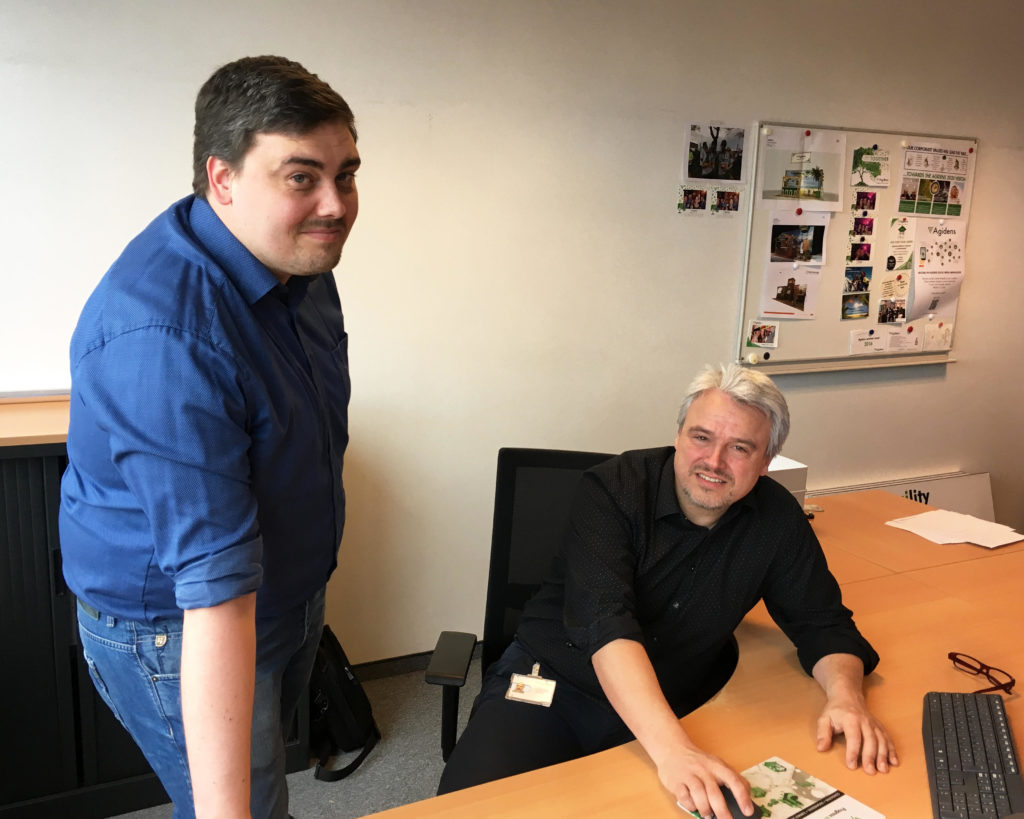
So join us, read and get inspired by our talk to Mr. Koen Algoet – Product Manager Terminal Solutions – and Mr. Kevin Pluvier – Project Manager Oil & Gas – at Agidens, a solutions provider with a workforce of over 600 people that for more than 70 years has been helping companies in various sectors to improve their operations in the areas of security, reliability, efficiency and sustainability.
Q: How would you describe the main market challenges at the present time?

In our view, the tank terminal market presents two main challenges.

The first is linked to Operational Excellence. Due to backwardation and the new capacity added in recent years, it is correct to expect a surplus of storage capacity that will increase the competition even more and leave profits under stress.

In this environment, there will be a high demand for improved, more efficient processes to guarantee full usage of the existing assets. A good example of how this can be realized is Agidens’ Axcel® smart slot booking solution. Due to increasingly bad traffic conditions, it is very common that trucks don’t make their schedules leaving terminals with empty slots and the necessity to reserve ‘late arrivals’ slots which reduce the normal asset capacity. Axcel® doesn’t use and thus ‘waste’ these empty slots but relies on the smart engine to recalculate updated planning scenarios keeping all available assets and resources into account.

The second challenge is linked to Human Resources. Nowadays there is a high workforce turnover in the industry, as a result of several reasons, among them the fact that young people don’t want to stay in the same job and activity for a long time anymore. The time and energy that is needed to train new employees into working with these manual procedures could be invested in automation. Furthermore, in order to attract and retain young people we can assume that automated terminals will have preference to manually operated terminals as an employer.

Q: And how do you see the industry evolving in a period of 5 to 10 years? What are the main challenges ahead of us?

As it was said before, due to the high competitiveness of the market there will be a growing pressure on the terminals in terms of operational excellence, but also to cope with the speed of innovation.

Even though there is a lot of interest in Artificial Intelligence, the focus in the next years will be on Big Data and in learning how to transform what is generated and collected by sensors – as a consequence of the development of the IoT – into knowledge.

Agidens understands the necessity to foster the development of specialists that can handle this new scenario that encompasses themes as cyber security, GDPR, new standards and regulations, and questions on how to communicate data between all the different networks, how to set up this data and how to do it in a secure, safe and controlled way.

Agidens embraces the proposition of sitting with the client to understand his problems and ‘pains’ in a consultative approach. So that the people involved in the project can take over and develop the product based solutions keeping a vision of the future time and not only the present.

At last, it is important to mention that no matter how much of a terminal’s management moves to the cloud, all that is related to safety must remain local.

Q: How is Agidens getting prepared for these future challenges?

Agidens understands that innovation is essential to offer competitive solutions to its clients, therefore we give special attention to this theme and how to accelerate its pace. We believe that if we expect to be ready for the challenges of the next ten years we must act today. First, by keeping a close relationship between our R&D department and universities as Leuven, Antwerp and Ghent. Second, by creating a culture and atmosphere that encourages our employees from different areas to voice their ideas and by granting time, budget and guidance from R&D for them to be developed.

As an example, at Agidens as soon as young engineers are hired they have the opportunity to be in direct contact with clients, especially with people who work on the field and experience the day to day challenges.

Agidens’ Atalk® solution is an excellent example of a product that was proposed by one of these young talents. While on the field, he noticed that there was a dangerous gap between the moment that a potentially dangerous event started – a fire, for instance – and the moment this information was passed to the personnel at the terminal. So he proposed a system that translates the usual text messages installed upon an existing operational control system such as SCADA or DCS into speech, in a way that now they can be transmitted by voice directly to the walkie talkies of all the employees around the terminal.

At last, it is important to give people time, support and a lot of training to be able to cope with the transformation speed of the industry.

PS: if you want to contribute to “Gripping Thoughts” please send an email to acavalcanti@insights-global.com

Find here other “Gripping Thoughts” articles:

Read now the interview with Bertrand Chupin, VP of the Loading Systems business unit of TechnipFMC, a global leader in subsea, onshore/offshore and surface projects, with about 37,000 employees.
Tank Terminal Market Model – Part 1

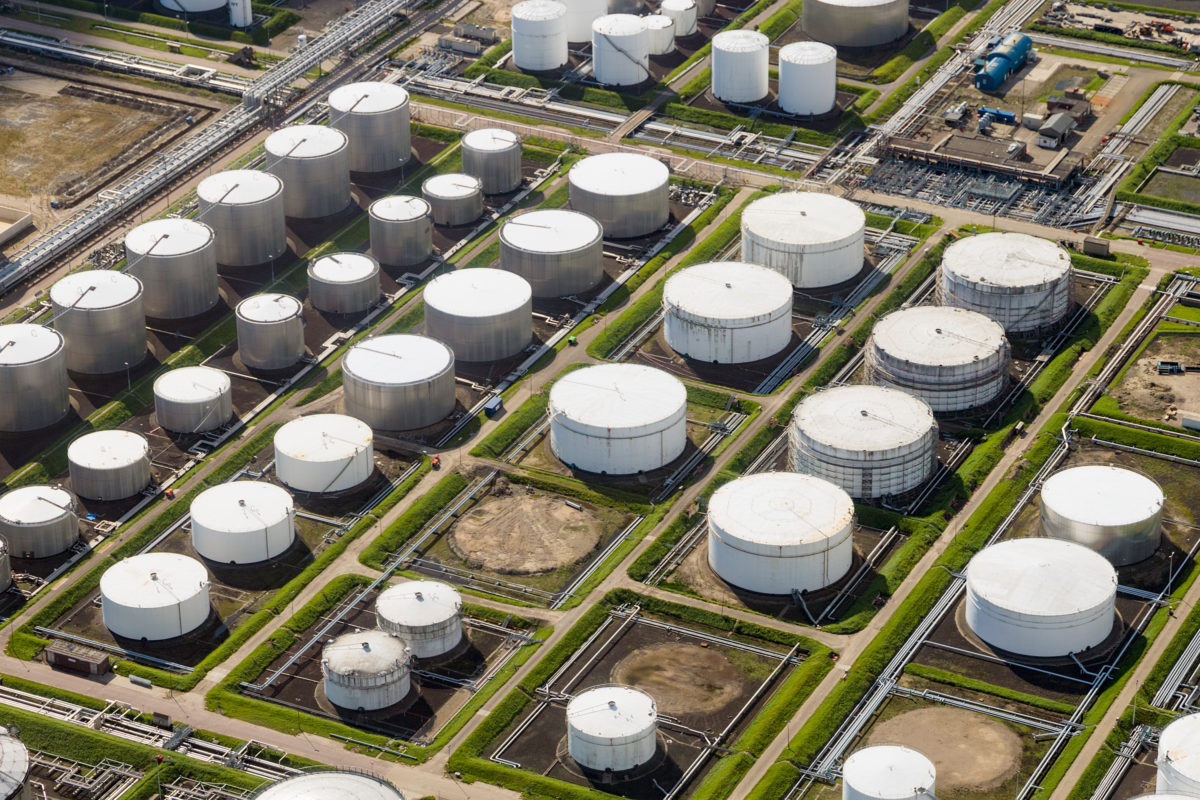
Last week was a short review of the profit drivers for physical traders, where we explained in short how traders make profit. There are a lot of different factors influencing the tank storage sector. Mostly the imbalances in the sector create opportunities for financial players. The market appears to be complex and demonstrating a lack of transparency. PJK International has developed a Tank Terminals Commercial Performance Model to quickly gain insight and a higher proficiency of the tank storage market. This is the first part related to the Tank Terminal Market Model, next week we will publish the second part for you to be able to connect the dots.  

MARKET FUNDAMENTALS

First we describe the market fundamentals as shown in the image below. Relevant market fundamentals for the oil storage business are the shape of the forward curve, the competitive market structure and the logistical factors supply, demand, imbalances and trade flows. The shape of the forward curve is determined on oil futures markets. The oil price forward curve can be upward sloping (contango) or downward sloping (backwardation). In a backwardated market is less demand for tank storage than in case of a contango. Inventory levels are also lower in a backwardation compared to a contango. Both demand and tank availability are therefore affected and this influences the commercial setting.

Furthermore the competitive market structure consists of a supply-side and demand-side market structure. Tank capacity and market shares of various terminal operators are key factors that determine the supply-side competition. The number of players, their size and diversity are key factors on the demand-side of the market. Both demand- and supply-side competition influence commercial performance of the terminals. And also Tank terminals are part of the oil products supply chain and therefore logistical factors such as local product demand, regional refinery output, imbalances and trade flows are very relevant. Developments in these factors influence the demand and requirements for tank terminal capacity.

MARKET DYNAMICS

Besides the market fundamentals we have to take into consideration the market dynamics. Relevant market dynamics are inventory levels, arbitrage and trade flows, changes in product specifications and variation in vessel sizes. These market dynamics have a direct influence on operations and on terminal requirements. A terminal that can accommodate and can adapt better and faster to these dynamics compared to competitors will likely show superior commercial performance. From the previous section you could already see that market dynamics are linked to market fundamentals.

CONCLUSION

The market fundamentals and the market dynamics are important building blocks for Insights-Global’s commercial performance model. If you have any questions regarding the above mentioned subject please do not hesitate to us. 

Functions of tank terminals

Introduction

During the coming weeks we will provide you with relevant information regarding the tank storage market and its influences and opportunities. This week we will focus on the different functions a tank terminal. It is the first of 5 blog articles for you to be able to better understand the drivers of this sector and help you with your commercial decisions.

Functions of a terminal

Tank terminals can have various functions, although commercial clients’ operational requirements tend to focus on the logistics/hub and trading platform functions. These three main functions are:

  • Logistics/hub – function
  • Trading platform
  • Strategic storage

Logistics/hub function

The logistics/hub function is firstly related to the make/break and bulk of the product(s). In addition we can observe an integrated approach between transport modalities such as sea, rail, road and pipeline. Also the correct integration with an industrial complex and buffer stock(s) are considered to be part of the logistical chain of a tank terminal.

Trading platform & Strategic storage

The tank storage activities can also be influenced by the financial markets, as investors, traders and other financial intermediates are active on various trading platforms. How do traders make money and why are they interested in the tank storage industry? Mainly by taking a physical (&paper) position(s), traders take advantage of a price differences between two or more instruments. They will make profit if there is a combination of matching deals that capitalize upon the imbalance. As a trading platform four important factors can be described:

  1. Physical arbitrage
  2. Blending
  3. Contango storage
  4. Optionality

How does physical arbitrage work? During arbitrage the global commodity traders seek to identify and respond to supply and demand differentials between linked markets. Trading firms are essentially in the business of transforming commodities in space (logistics), in time (storage) and in form (processing). Traders with access to physical oil and storage can profit in a contango market, as the futures price of a commodity is above the expected spot price, and people are willing to pay more for a commodity at some point in the future than the actual expected price of the commodity. Besides this also optionality is very important as it builds in flexibility to profit from market opportunities and limits losses if the market turns against positions.

Conclusion

By focussing on the things that matter we can understand better how our clients are making money. As a result it can help shape your business, to have a better insight and to be able to make better operational and commercial decisions. By watching market indicators like the oil price level, market volatility and the forward curves it will provide a better picture of the market. This directly provides in-depth insights into the tank storage market developments. Our weekly report is specifically designed to clarify the mentioned above, and to provide a weekly market snapshot. If you would like more information please do not hesitate to contact me.