
Tankers & Terminals Market Report: Week #35
Brent crude slides below $90/bbl, House moves to curb Iran war, plus, OPEC and IEA split on 2026 demand.
Oil prices were en route to end the week lower and Brent crude slides below $90/bbl as President Trump has called off planned strikes on Iran.
During last week, some military activity was seen but it seems that both parties are looking at ways to end hostilities.
(1) The US bombed various near-Tehran ports and infrastructure and Iran downed an US helicopter and closed the Strait of Hormuz.
(2) OPEC lowered its demand forecast for 2026 to a growth of just below 1 million barrels per day. It was the 2nd downward revision, in line with expectations of IEA and Worldbank.
(3) More vessels have been seen navigating out of the Arabian Gulf, including various LNG tankers that shut their transponders off. India reported that crude deliveries for the coming weeks/months were also secured.
(4) Europe has seen a higher intake of Saudi jet fuels in past weeks. This could be attributed to the loadings in the Red Sea port of Yanbu.
(5) Russia is rationing motor fuel after Ukrainian strikes, citing unplanned refinery maintenance. IEA says crude output fell by almost 500,000 bpd in April.
Tankers & Terminals Market Report’s weekly advantages:
(1) A thorough overview of the events impacting oil and gas commodity markets.
(2) The data that tracks how those events change prices, storage, margins, shipping and therefore trading profits.
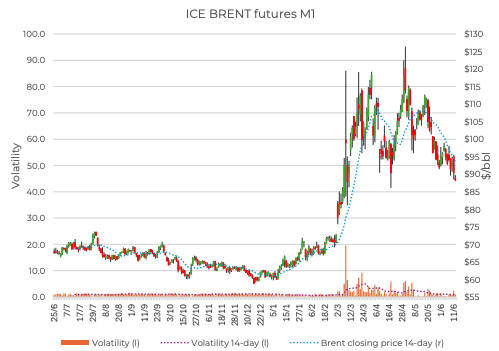
Sample (Slide 5) > Crude oil: Price levels and volatility
- Crude oil prices extended the downward trend in the past week on hopes that a ceasefire and truce between Iran and the US is upcoming, despite attacks back and forth. Meanwhile, activity by Israel in Lebanon is also slowing down which is pushing Brent crude to below $90/bbl. This could become the first daily close below $90/bbl since the start of the war.
Tankers & Terminals Market Report has 11 KPIs, listed within of 5 main categories:
(1) Feedstock price levels & volatility
(2) Forward curves
(3) Plant margins & output levels
(4) Shipping & terminal activity
(5) Stock Levels